Evermotion: More Than an Asset Library
How Evermotion became a full-scale production partner for archviz, automotive and synthetic data.


Total: € 0
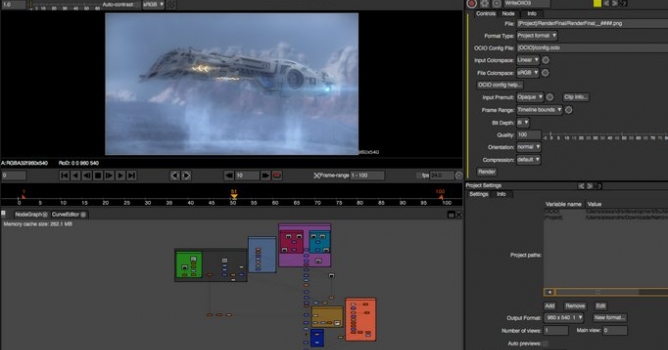

This is the first stable release.
New features include:
New HSVTool node to adjust hue, saturation and brightnes, or perform color replacement.
New HSVToRGB & RGBToHSV nodes to convert between these 2 color-spaces
New Saturation node to modify the color saturation of an image.
New DiskCache node. This node allows to cache a branch of the compositing tree to re-use it later on without re-computing the images. This cache is persistent on disk and is saved between 2 runs
of Natron. You can configure the location and maximum size of the cache in the preferences of Natron; in the Cache tab.
A new progress bar will display the progression while loading a project
Tracker: all tracks are now multi-threaded for better performances. Also fixed a bug where the overlay displayed while tracking wasn't matching the underlying displayed image.
Roto: Selected points can now be dragged from everywhere within the bounding box instead of only the cross-hair.
Full release changelog list is here.
Natron 1.1. is coming. The following features are included in the plans for Natron v1.1 and already almost implemented:







LEAVE A COMMENT



|

|

|

|

|
 Customer zone
 Your orders
 Edit account
 Add project
 Liked projects
 View your artist profile
COMMENTS