A big update to V-Ray for 3ds Max that render most scenes up to 20-50% faster!
V-Ray 3.3 for 3ds Max also introduces new variance-based adaptive sampler – a new algorithm that makes renders quicker to setup and removes the need to set subdivisions for lights and materials. This makes it much easier for users to get high-quality, predictable renders.
New features Render most scenes up to 20-50% faster with V-Ray 3.3 for 3ds Max! V-Ray 3.3 for 3ds Max introduces new variance-based adaptive sampling for quick setup, uniform noise distribution, and higher quality images – with less dependence on settings for lights and materials.
Variance-based adaptive sampler (VBAS)
Better sampling of dark areas and faster sampling of overbright areas
More consistent noise detection
Final image quality is less dependent on materials and lights settings
Improved alpha channel sampling – especially in scenes with depth of field and motion blur
Works in bucket and progressive rendering modes
Other new V-Ray 3.3 for 3ds Max features include:
New Global Defaults
Variance-based adaptive sampler enabled by default
Automatic sampling of lights and materials – removing the need to set subdivisions manually
Ray Traced Rounded Corners
Perfectly smooth edges at render time with no additional modeling – based on licensed technology from NVIDIA
Advanced edge detection with support for concave and convex surfaces simultaneously
Works with separate objects, VRayProxy objects, displaced objects etc.
New Sky Model and Aerial Perspective
Hosek sky model to simulate more natural looking skies
Ground color option for VRaySun and VRaySky
Aerial perspective for efficient and realistic atmospheric depth
Triplanar Mapping
Fast seamless textures without UVs
Control over edge blending and texture parameters, including randomization
Works on procedural geometry
Improved V-Ray Clipper with Render-Time Booleans
Supports cutaways using any arbitrary mesh
Stochastic Flakes
Ultra-realistic materials with sparkle effects like snow, sand, and car paints
Updated Features:
Global Illumination
More robust handling of reflective GI caustics, better light propagation, and more natural illumination of interior scenes
Distributed light cache for faster calculations with distributed rendering
GPU Rendering
More texture nodes – MultiTexture, VRayMultiSubTex, ColorCorrection etc.
Proxy objects with hair and particles
VRayFur and VRayPlane objects
Light include/exclude lists
Progressive Sampler
Dynamic noise threshold leads to more uniform noise distribution
Improved sub-pixel filtering
Improved CPU utilization
Volume Rendering
Faster volume rendering with probabilistic sampling
Geometry
Faster rendering of proxy objects and instances
Faster rendering with Forest Pack Pro
V-Ray Frame Buffer
Compare V-Ray settings
Load color corrections
Save LUT files
Availability
V-Ray 3.3 for 3ds Max is a free update for all V-Ray 3.0 customers. Login at chaosgroup.com to download.
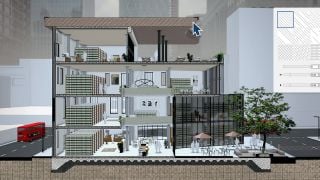
SketchUp 2027 integrates procedural modeling, AI rendering, and Claude-powered generation to speed concept work before handoff to external renderers. System requirements narrow to Windows 11 and Apple Silicon, and a Ruby upgrade may affect plugins.
ITOOSOFT's free ColorEdge plugin uses procedural edge detection to blend road and terrain materials without geometry or baking. It works with V-Ray and Corona CPU renderers on 3ds Max 2022–2026, though GPU users should test compatibility first.
Fumaris, a $39 GPU-based simulation extension for Blender 5.1+, lets archviz artists bake smoke and fire effects in real time using NVIDIA Flow, eliminating the traditional export-to-external-simulator workflow.
A new $39 plugin for 3ds Max 2022–2027 ports Maya's UV Editor interface—component modes, marking menus, and edge selection—directly into Max. Built on the native Unwrap UVW modifier with a 25% launch discount, it cuts repetitive UV work for archviz studios.
Substance 3D Painter 12.2 lets artists adjust baking cage distance per-pixel on the model itself, eliminating full-cage recalculations. New Order Independent Transparency also improves viewport preview of glass and transparent surfaces.
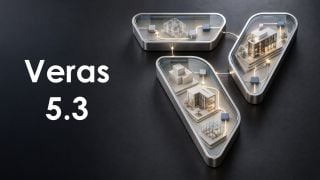
Veras 5.3 introduces NODES, a visual workflow builder now in Beta that lets users generate parametric geometry and bake it directly into Revit, Rhino, or SketchUp. The system shifts Veras from rendering-first to a full generative design platform with interactive design tools.
SketchUp 2025–2026 has added native PBR materials, AI image generation, and real-time rendering plugins like Lumion View, letting archviz artists produce photorealistic images without leaving the viewport. This collapses the traditional design-to-render pipeline.
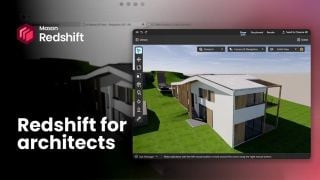
Maxon's Redshift 2027.0 cuts render times by up to 15% through memory optimization and adds official Archicad integration alongside improved materials and live feedback tools.
Substance 3D Painter 12.2 lets artists adjust baking cage distance per-pixel on the model itself, eliminating full-cage recalculations. New Order Independent Transparency also improves viewport preview of glass and transparent surfaces.
In this walkthrough, we guide you through the process of building a polished 3D interior scene inspired by the cover of Archmodels vol. 306 – Table Sets.

 Customer zone
 Your orders
 Edit account
 Add project
 Liked projects
 View your artist profile










COMMENTS